 PartDorinUpload RFQRFQ
HAVAL H6 suspension parts sourcing: shocks, control arms, hubs and bushings
Convert noise, steering or tyre-wear observations into a workshop-confirmed H6 suspension list and a traceable distributor RFQ.
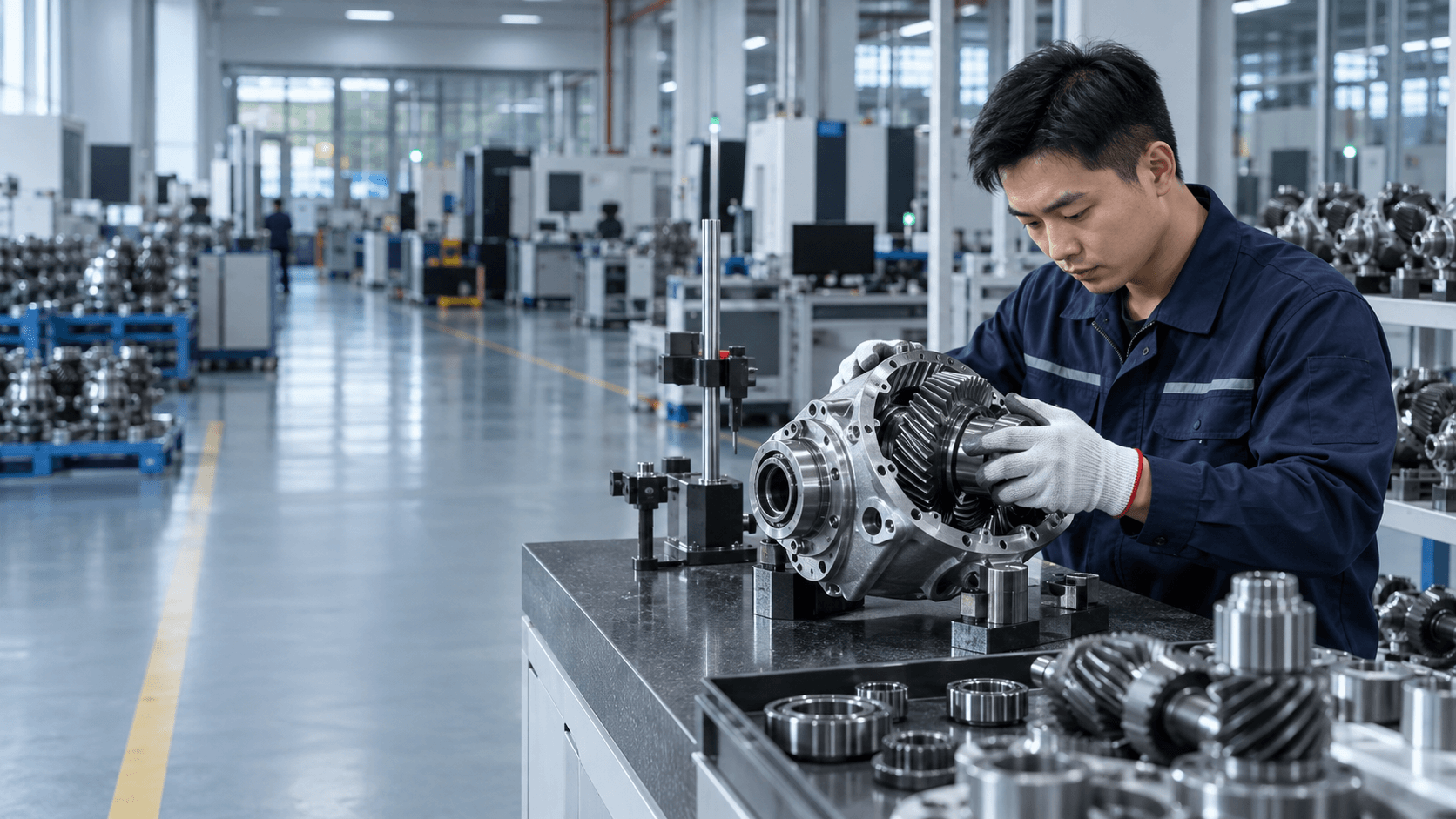
To source HAVAL H6 suspension parts, identify the generation, VIN, market, build date, petrol/HEV/PHEV version, 2WD/4WD layout, axle and side. Add the OE reference, mounts, dimensions and photos. A symptom such as noise or uneven tyre wear must be diagnosed before selecting shocks, arms, hubs or bushings.
Short answer: identify the H6 generation and confirmed repair before selecting parts
HAVAL H6 suspension parts should be sourced by exact generation, VIN, original market, production date, petrol/HEV/PHEV configuration, 2WD/4WD layout, axle and side. Add the complete OE reference, installed-position photographs, mounts, dimensions and included hardware. A noise, steering complaint or uneven tyre wear should trigger qualified inspection, not an automatic shock-absorber or control-arm order.
The H6 name covers several generations and regional powertrains. Even when two vehicles look similar, axle load, drive layout, brake package, hub sensor, mounting geometry or electronic equipment can change a chassis reference. A useful B2B request therefore treats the model badge as the beginning of identification rather than proof of fitment.
This article is for distributors, importers and workshop networks preparing parts lists. It does not provide repair, alignment or torque instructions. Suspension and wheel-end work affects vehicle control and requires trained personnel, authoritative service data and a complete post-repair check.
What a suspension symptom can—and cannot—prove
Knocking, clicking or rattling
A sound over bumps can involve more than one component or an unrelated item. A qualified inspection may consider links, bushings, joints, mounts, dampers, springs, steering interfaces, brakes, underbody parts and fastener condition. The purchasing team should request the technician’s confirmed list and part position instead of sending “front knocking noise” as a product specification.
Vehicle pull or unstable steering feel
Pulling can involve tyres, pressure, alignment, brakes, road conditions or chassis components. It does not prove that a control arm or shock absorber has failed. Record diagnostic results for the workshop and translate only the confirmed replacement items into the RFQ.
Uneven tyre wear
Tyre wear patterns can relate to pressure, alignment, load, wheel condition, joints, bushings, dampers or other factors. Do not use an online photograph to diagnose the cause. Once a technician identifies the required parts, keep the axle, side, drive layout and related alignment work visible in the service record.
Vibration or wheel-end noise
Vibration and humming may involve tyres, wheels, hubs, bearings, shafts, brakes or other systems. A hub or bearing request should follow a competent diagnosis and include flange, sensor and mounting evidence. The supplier cannot confirm a wheel bearing from a recorded sound alone.
Define the exact HAVAL H6 before requesting a quotation
Record the VIN, generation, regional model name, build date, powertrain, transmission and 2WD/4WD layout. The HAVAL H6 parts sourcing page provides the broader vehicle checklist. Use the Chinese export model variant guide when a domestic-market and export-market description may differ.
GWM has used H6 across a long product history. An official GWM H6 launch description documents one earlier suspension configuration; it should not be generalized to every later generation or regional variant. Current vehicle identification and service data are necessary for the actual part.
Official model information helps describe a vehicle but does not replace an electronic parts catalogue. When a supplier claims one reference covers several H6 generations, ask for the source and the exact production, powertrain, drive and axle conditions. Preserve each approved application separately in the distributor database.
The minimum H6 suspension-parts evidence packet
For each line include:
- Complete VIN and its permitted source image.
- Generation, exact market name and physical build date.
- Petrol, HEV or PHEV configuration, engine/hybrid system and transmission.
- 2WD or 4WD and driven axle.
- Front/rear and left/right position.
- Complete OE number and its source.
- Full part, label, mount, connector and installed-position photos.
- Key dimensions from a controlled drawing or qualified measurement.
- Included bushings, joints, brackets, nuts, bolts or sensors.
- Quantity, selling unit, packing and inspection requirements.
Use one RFQ row for each sellable item. Do not put “front suspension kit” in one row unless every included component is listed. The VIN and OE matching guide explains how to keep buyer SKU, supplier number and OE reference separate.
Shock absorber and strut sourcing
Identify axle, side, complete strut versus damper-only scope, upper and lower mounts, spring-seat geometry, rod and body dimensions, brackets, sensor or electronic connector and included bump stop, boot or mount. Record extended/compressed dimensions only when measured by a controlled method appropriate to the product.
Exterior shape is not enough to establish damping specification, internal construction or application. A left and right front strut can have mirrored brackets even when the bodies look similar. Keep side identity in the supplier number, buyer SKU and carton label.
If the request is for a complete loaded strut, list spring, upper mount, bearing, insulator, boot, bump stop and hardware. Compare quotations by assembly content. If the spring is separate, record its identifiers and application; color marks alone should not be used without a documented interpretation.
Ask how the supplier controls identity, dimensions, leakage, movement, force characteristics and finish. The appropriate factory test depends on the design and buyer specification. “Road tested” or “100% tested” is not useful without method, sample size and acceptance criterion.
Packing should protect the rod, thread, seal area, brackets and finish. Long units need internal restraint so they cannot puncture cartons or damage adjacent parts.
Control arms, bushings and ball joints
For a control arm, record exact position, left/right side, body and subframe mounts, ball-joint interface, bushing arrangement, material/construction and included hardware. A quotation should state whether bushings and ball joint are pre-installed or the arm is bare.
Bushings require outer/inner dimensions, orientation, void pattern or stiffness specification from an approved source, and the exact arm or mount application. A bushing that fits the bore can still have an unsuitable orientation or characteristic. Do not approve from diameter alone.
Ball joints need mount pattern or press-fit details, stud taper/thread, boot and included hardware. Protect the taper, thread and boot during packing. Safety-related material, heat-treatment and durability evidence should be defined by competent technical personnel; appearance cannot prove these characteristics.
If the workshop replaces only a bushing rather than a complete arm, confirm that the repair method is supported for the exact vehicle and that appropriate pressing/alignment procedures are available. The parts supplier should not decide the repair strategy remotely.
Stabilizer links, bars and mounts
For a stabilizer link, record axle, side if applicable, overall/center length, joint orientation, stud or mount interfaces and included nuts. Similar links may differ by a small length or joint angle that is difficult to see in a marketplace image.
For stabilizer bushings, provide bar diameter from a reliable measurement, mount shape and part reference. The nominal bar size and bushing internal profile must be controlled; a generic rubber block is not an acceptable substitute.
For bars or assemblies, add overall shape, mount positions and finish. Long bars need distortion-resistant packaging and clear orientation labels. The inspection plan should verify identity and key geometry without forcing the part into a fixture that could damage the finish.
Wheel hubs and bearings
Hubs and bearings connect suspension, wheel, brake and speed-sensing systems. Record axle, side, driven/non-driven condition, 2WD/4WD, flange and bolt pattern, bore/shaft interfaces, overall dimensions, sensor or encoder arrangement, connector and supplied bolts or nut.
A bearing can have the same broad dimensions while using a different seal or encoder. Avoid placing magnetic tools or contamination near an encoded surface when handling instructions prohibit it. Ask the supplier how orientation and sensor features are identified and protected.
For a hub assembly, distinguish complete hub, bearing-only, flange, knuckle assembly and accessory scope. A low price may omit the sensor, bolts or nut. Put every included item on the purchase order.
At incoming or shipment inspection, check machined faces, threads, seals, connector, sensor lead, free condition under the agreed method, markings and protective caps. Do not perform an improvised spin test as a substitute for defined bearing controls.
Springs, mounts and rubber components
Springs require exact axle/position, vehicle load or trim condition where relevant, wire and coil geometry from controlled data, free length and finish. A spring can physically install while changing ride height or vehicle behavior. Use the exact approved application and do not infer suitability from color or overall height alone.
Upper mounts and bearings need stud pattern, orientation, bore, bearing and rubber configuration. State whether the product is a mount, bearing, insulator or complete kit. A “strut mount kit” should list each piece.
Rubber components should have controlled material and geometry requirements appropriate to the application. Storage and packing should avoid deformation, contamination, sunlight and chemicals inconsistent with supplier instructions. Do not claim a universal service life; operating conditions and product validation matter.
Share the reference, vehicle application and target quantity so the technical and packing questions can be reviewed against your actual order.
Upload Your RFQKnuckles, subframes and larger chassis parts
For a steering knuckle, record axle, side, hub/bearing interface, strut or arm mounts, brake-caliper mounts, steering link and sensor provisions. Machined interfaces and threads require protection. A casting number may identify a family but not always the finished service part.
Subframes and crossmembers require vehicle generation, powertrain/drive layout, mount positions, attached brackets, finish and shipping fixture. Large geometry needs a controlled drawing or approved fixture, not only overall length/width. State whether bushings and mounts are included.
Heavy chassis items need stable pallets, protected corners and handling instructions. Shipment inspection should check visible distortion, finish, threads, identity and fixture/packing condition. A carton photograph is insufficient when a part can bend under its own poorly supported weight.
Petrol, HEV, PHEV and 2WD/4WD differences
Powertrain and drive layout can change axle load, underbody packaging, shaft/hub configuration, springs, dampers and mounts. Do not copy a petrol 2WD application into HEV, PHEV or 4WD fields without part-specific evidence. The exterior badge is not the technical condition.
When the supplier returns one cross-reference for several configurations, ask which interfaces and product specifications are shared and which source supports the range. Keep every approved condition visible even when the physical SKU is the same. This prevents an application expansion from hiding inside a product-number update.
For electrified vehicles, high-voltage systems may be near workshop lifting or underbody areas. Service and recovery procedures require trained personnel and authoritative vehicle information. A suspension-parts purchase guide does not replace those safety procedures.
A seven-step H6 suspension sourcing workflow
Step 1: obtain a qualified diagnosis
Separate the customer’s symptom from the technician’s confirmed replacement list. Ask whether related tyres, brakes, steering, alignment or accident damage were evaluated.
Step 2: validate vehicle identity
Confirm VIN, generation, market, build date, powertrain, transmission and drive layout.
Step 3: define axle, side and assembly
Write front/rear, left/right and complete/bare/kit scope in every line. List all included hardware.
Step 4: capture OE and physical evidence
Preserve the full reference and source. Photograph markings, mounts, connectors and installed position.
Step 5: compare decisive interfaces
Use controlled dimensions, drawings, samples and system features. Do not approve from overall appearance.
Step 6: approve sample and control plan
Record product number, vehicle condition, dimensions, material/test evidence, labels and packing appropriate to the risk.
Step 7: inspect shipment and close feedback
Verify identity, side, interfaces, accessories, quantity and protection. Investigate any wrong-part report before changing the application database.
Factory testing and PPAP-style evidence for chassis parts
The evidence package should match the program. A distributor trial order may use a controlled drawing, sample report and shipment inspection. A customer program requiring PPAP, FAI or ISIR needs an agreed submission level and approved documents. The PPAP, FAI and ISIR guide explains how to define that request without using the acronym as a vague quality claim.
For dampers, ask for the specified dimensional and performance controls. For arms, joints and hubs, define drawings, material, heat treatment, dimensional inspection and functional/durability evidence appropriate to the part. For rubber, define material and characteristic controls. Never invent test values to make a page appear technical.
Trace a production lot to the supplier number, date/lot and inspection record. Shipment inspection can verify identity and selected features, but it cannot recreate destructive or laboratory validation at the packing stage.
Copy-ready HAVAL H6 suspension RFQ
- Buyer SKU / RFQ line:
- VIN / generation / market / build date:
- Petrol, HEV or PHEV / transmission / 2WD or 4WD:
- Front or rear / left or right:
- Confirmed workshop repair item:
- Complete OE reference and source:
- Required assembly and included hardware:
- Mount, connector and installed-position photos:
- Controlled dimensions or drawing:
- Quantity / selling unit / packaging:
- Required sample, test or submission evidence:
- Open fitment questions:
Ask the supplier to return its number, confirmed application and exclusions, assembly content, drawing/sample availability, test scope, MOQ, lead-time assumptions and packing plan. Use the AQL inspection guide when agreeing a shipment sampling plan.
Shipment inspection and packaging
Select samples by purchase-order line and carton. Verify supplier and buyer numbers, axle/side, markings, mounts, connector/sensor features, accessory content and quantity. Compare only the dimensions or functions named in the approved inspection plan.
Protect damper rods and threads, ball-joint tapers and boots, hub machined faces and sensors, long links and heavy arms. Use dividers or restraints so parts cannot collide. Check master-carton weight and pallet stability against the transport plan.
Photographs should connect the inspected product, inner label and master carton. A general warehouse view is helpful context but not evidence that the correct left/right line was packed.
Common purchasing errors
- Ordering by “HAVAL H6 2022” without generation, market, VIN and build date.
- Omitting petrol/HEV/PHEV or 2WD/4WD.
- Treating noise or tyre wear as a confirmed shock-absorber failure.
- Mixing front/rear or left/right references.
- Comparing a bare strut with a complete loaded-strut price.
- Approving a control-arm bushing by diameter alone.
- Ignoring hub sensor/encoder features.
- Assuming a casting number identifies the finished service part.
- Using “heavy duty” without a defined specification and evidence.
- Shipping long or heavy parts without internal restraint.
FAQ
Can HAVAL H6 shock absorbers be ordered by VIN only?
The VIN anchors the vehicle, but the RFQ should also state generation, market, build date, powertrain, 2WD/4WD, axle, side, OE reference, mount details and complete-versus-bare assembly scope.
Should both shock absorbers on an axle be replaced together?
That is a service decision for the qualified workshop using authoritative vehicle information and the actual condition. The sourcing team should quote the confirmed repair scope and clearly define whether the selling unit is one piece or a pair.
Are H6 petrol and hybrid control arms interchangeable?
Do not assume so. Compare VIN, generation, production date, powertrain, drive layout, OE reference, mounts, bushing and ball-joint interfaces. Approve only the conditions supported by evidence.
What causes uneven tyre wear on an H6?
Several tyre, pressure, alignment, wheel, suspension, steering or usage conditions may contribute. Online content cannot diagnose the vehicle. A qualified inspection should identify the cause before parts are ordered.
What should be checked before suspension parts leave the factory?
Check product and carton identity, axle/side, approved interfaces or dimensions, boots, threads, rods, sensors, hardware, finish, quantity and protective packaging. Review lot-specific records required by the purchase order.
Conclusion: convert the symptom into a controlled parts list
Reliable HAVAL H6 suspension parts sourcing begins with a qualified diagnosis and exact vehicle configuration. Keep generation, powertrain, 2WD/4WD, axle, side, OE evidence and assembly content visible. Approve product-specific interfaces and carry the same identity through packaging and shipment inspection.
PartDorin is an independent B2B sourcing and manufacturing-support company and is not affiliated with or authorized by GWM or HAVAL. To prepare an H6 chassis order, send your VINs, workshop list, OE references, photos and quantities. We can organize confirmed lines and open fitment questions for a focused quotation.
Discuss the requirements for your next order.
Send your part references, vehicle applications, target quantities, destination market and any inspection or packing priorities. PartDorin will review the information needed for a focused quotation.
Send Your Requirements