 PartDorinUpload RFQRFQ
Automotive parts landed cost calculation for importers
A useful landed-cost model compares suppliers at the same destination and on the same product, packing, Incoterm and duty assumptions—not on unit price alone.

Automotive parts landed cost is the total cost required to place the usable goods at the buyer’s chosen destination. Build it from the product and tooling value, export packing, inland and international freight, insurance, duty, import taxes, brokerage, port charges, inspection, bank costs and destination handling, then divide by the accepted saleable units.
What is automotive parts landed cost?
Automotive parts landed cost is the total cost required to place accepted, saleable goods at a defined destination. It begins with the purchased product but continues through packing, inland transport, international freight, insurance, customs duty, import taxes, brokerage, terminal charges, inspection, bank costs, and receiving. The destination must be stated because “landed” at the port is not the same as landed at the buyer’s warehouse.
The calculation is valuable because an attractive unit price can be offset by poor packing density, high weight, additional duty, expensive handling, or an excessive minimum order. Conversely, a quotation that appears higher at the factory may produce a lower cost per saleable unit when it includes better packaging, fewer missing accessories, clearer labels, and lower receiving effort.
The U.S. International Trade Administration describes landed cost as the total price after a product arrives at the buyer’s destination and recommends accounting for tariffs and transport-related costs. For a real purchase, use current quotations and broker-confirmed assumptions rather than a generic percentage.
Set a common comparison baseline first
Do not compare an EXW quotation with a DAP quotation by placing the two totals in one price column. First normalize the product, selling unit, included accessories, packaging, quantity, currency, Incoterm, named place, origin, and destination. If the technical scope differs, the landed-cost comparison is not yet valid.
For automotive parts, confirm whether the price is per piece, wheel set, axle set, pair, kit, or assembly. A clutch kit may or may not include a release bearing. A brake-caliper quote may include the carrier on one offer and exclude it on another. An engine assembly can mean a bare, short, long, or more complete configuration. Record these differences before calculating freight or duty.
- Product identity: OE or controlled reference, application, configuration, and included content.
- Commercial unit: piece, pair, set, kit, assembly, carton, or other stated unit.
- Quantity: order quantity, free replacements, samples, and expected accepted units.
- Delivery basis: Incoterms® 2020 rule and exact named place or port.
- Packing: inner quantity, carton size, gross weight, pallet plan, and total volume.
- Import basis: origin, proposed HS classification, valuation treatment, and destination.
Use the PartDorin RFQ guide to create this baseline before requesting competing freight and customs estimates.
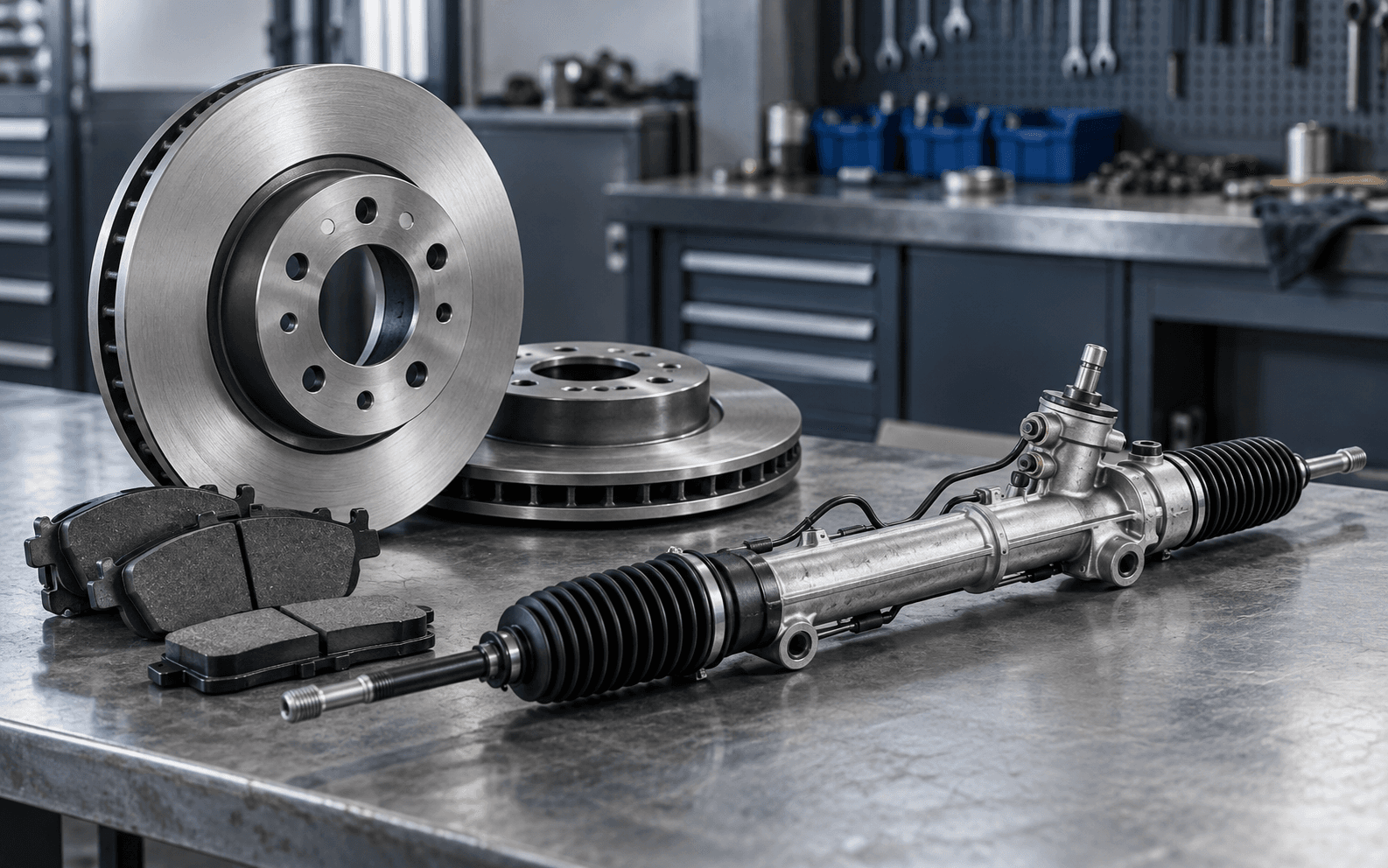
Landed-cost formula for automotive parts
Use a transparent worksheet rather than one hidden percentage. A practical shipment-level formula is:
Landed shipment cost = product value + tooling or order charges + export packing + origin transport and handling + international freight + insurance + duty and trade measures + import taxes not recoverable + brokerage and clearance + destination handling + inspection and finance costs.
Then calculate accepted-unit cost:
Landed cost per accepted unit = landed shipment cost ÷ accepted, saleable units received.
The second formula matters when shortages, damage, failed inspection, or unserviceable units reduce the quantity that can be sold. Keep recoverable taxes separate from true cost when the buyer’s accounting treatment allows recovery. Ask a qualified accountant how taxes and inventory costs should be recorded in the destination jurisdiction.
Product value, tooling, and supplier-side charges
Begin with the commercial invoice value, but keep one-time and recurring items separate. Tooling, molds, fixtures, artwork, samples, testing, packaging plates, pallet charges, export documentation, and minimum-order surcharges can affect the first shipment differently from replenishment orders.
If a custom mold supports several years of orders, management may amortize it across forecast volume for commercial planning. The customs treatment may be different and should be discussed with the broker. Do not silently remove assists, tooling, or other value elements from the customs conversation merely because they are paid on a separate invoice.
Currency also matters. Record the quotation currency, payment milestones, bank charges, and the exchange rate used for the estimate. Run a sensitivity check for a reasonable exchange-rate movement rather than presenting one number as guaranteed. When comparing suppliers, use the same conversion date and method.
Packing, weight, and volume can change the winner
Automotive products occupy very different freight profiles. Brake discs are dense and heavy. Bumpers and body panels are light but volumetric. Lamps and mirrors need protective space. Shock absorbers are long and can waste carton volume. Engines and transmissions require strong bases and controlled handling.
Request the proposed inner-pack quantity, master-carton dimensions, carton gross weight, pallet dimensions, pallet count, and total cubic volume before choosing the transport plan. Verify those values again after packing. A freight quotation based on an early estimate can change when the final cargo is larger or heavier.
Packing should not be reduced simply to improve volume. The cost of corrosion, broken tabs, dented panels, cracked lamps, or mixed labels can exceed the saved freight. Compare packaging alternatives by total cost and product risk: protection, handling, warehouse efficiency, and disposal as well as cubic meters.
Freight, insurance, and Incoterms assumptions
Incoterms® rules help allocate selected costs, risks, and obligations, but they do not provide the freight price. The International Chamber of Commerce explains that the named place can identify the delivery point, destination, or both depending on the rule. Record the exact location and Incoterms® 2020 version in every comparison.
For EXW or FCA offers, the buyer may need origin pickup, export handling, terminal charges, and main carriage. For CFR or CIF, destination charges and import clearance can remain outside the seller’s price. DAP and DDP appear more complete, but the buyer should understand customs representation, import tax treatment, and which local charges are truly included.
Obtain freight quotations using the same cargo data and validity period. Separate base freight, fuel or security surcharges, documentation, terminal handling, pickup, delivery, and any peak-season or equipment charges. Insurance should state insured value, scope, exclusions, deductible, and claim process rather than appearing as an unexplained percentage.
Duties, taxes, and trade measures
Duty calculations depend on destination-country classification, origin, customs value, and current trade policy. The internationally harmonized six-digit code is extended by national tariff schedules. Provide the broker with enough technical detail to classify each product correctly; do not assume every automotive component belongs under one heading.
The customs value may include more than the invoice line value, depending on local valuation rules and the transaction. Freight, insurance, assists, royalties, tooling, or related-party considerations can require review. Anti-dumping duties, countervailing duties, safeguard measures, or additional tariffs may apply to particular products and origins. These are high-impact items and should never be estimated from an old shipment without confirmation.
Separate import VAT, GST, or sales tax that the business can recover from taxes that become a true cost. Record cash-flow impact even when a tax is recoverable, because the importer may finance it between clearance and recovery. Use a licensed broker and qualified tax adviser for the actual transaction.
Share the reference, vehicle application and target quantity so the technical and packing questions can be reviewed against your actual order.
Upload Your RFQBrokerage, port, inspection, and receiving costs
Smaller charges become material when they are spread across low quantities or many SKUs. Include customs brokerage, entry fees, terminal handling, port security, document release, examination, storage, demurrage risk, delivery appointment, unloading, pallet exchange, and warehouse receiving labor when applicable.
Inspection is also part of commercial control. Sample inspection, laboratory testing, rework, third-party inspection, or factory visits have direct costs, but skipping them does not make risk free. Use the pre-shipment inspection service page to define what must be checked before the balance payment or dispatch.
At receiving, record sorting, relabeling, barcode creation, kit completion, damage, shortages, and disposal. These costs often reveal why the cheapest ex-factory offer did not produce the best inventory. Feed the actual data back into packaging and supplier discussions for the next replenishment.
Worked planning example without false precision
Assume a distributor compares two brake-and-suspension programs at the same destination. Supplier A offers a lower product value but uses larger cartons and requires a higher quantity. Supplier B has a higher unit price but a denser package and includes hardware that Supplier A quotes separately. The buyer should build both offers to the same kit content and quantity before adding logistics.
For each offer, enter product value, separate accessories, packing, pickup, export handling, freight, insurance, broker-confirmed duty, taxes, clearance, delivery, inspection, and receiving. Divide by accepted selling units, not ordered pieces when units are sets. Then run sensitivity cases: freight up 15%, exchange rate movement, 2% receiving loss, and a slower inventory turn caused by the higher MOQ.
This method may show that Supplier A remains cheaper, Supplier B becomes cheaper, or the difference is small enough that fitment confidence and warranty handling decide the award. The model should support the decision rather than force every factor into one invented precision score.
Include inventory and quality risk outside the customs total
Traditional landed cost ends when goods reach the defined location. A purchasing decision may need a broader “landed value” view that includes inventory holding, obsolete references, returns, technical support, warranty, and lost sales. Keep these risk estimates visible but separate from broker-confirmed import costs so the team knows which numbers are measured and which are planning assumptions.
MOQ is especially important for distributors. One supplier may require 100 pieces across a narrow range; another may support 20 pieces across more references. The first offer can have lower freight per unit but higher slow-moving stock. Model expected demand, replenishment time, storage, and clearance markdowns alongside the landed unit cost.
Quality risk should be evidence-based. Use sample results, shipment inspection, receiving data, and prior claims rather than a generic supplier score. Track wrong fitment, missing accessories, label errors, transit damage, functional defects, and unexplained shortages separately because each requires a different corrective action.
Reconcile estimate to actual cost after arrival
The first worksheet is an estimate. Close the loop after customs clearance and receiving by replacing estimates with actual invoices and records. Compare freight, duty, brokerage, terminal charges, delivery, quantity received, and saleable units against the plan. Record both absolute and per-unit variances.
Ask why the difference occurred. Final volume may have changed; a tariff classification may have been corrected; storage may have resulted from late documents; or the warehouse may have spent extra time sorting mixed labels. Each variance should improve the next RFQ, packing plan, or shipping instruction.
Keep a versioned landed-cost record by route and product family. Do not reuse a historic freight or tariff rate without a new validity check. A transparent worksheet becomes more accurate over several orders because it is connected to actual operational evidence.
Frequently asked questions
Is landed cost the same as DDP price?
No. A DDP quotation allocates specified delivery obligations to the seller, but the buyer should verify the named place, import arrangements, taxes, exclusions, and local charges. Landed cost is the buyer’s complete internal cost model and may include inspection, finance, receiving, and other costs outside the quoted DDP amount.
How should freight be allocated across mixed auto parts?
Use the driver that creates the freight cost. Chargeable weight or cubic volume is normally more informative than invoice value for transport, while insurance often follows value. Mixed allocation methods are reasonable when documented and applied consistently.
Should recoverable import VAT be included?
Show it separately. If the business can legally recover the tax, it may not be a final product cost, but it can create a significant cash-flow requirement. Confirm the accounting and tax treatment with a qualified adviser in the importing country.
How often should a landed-cost model be updated?
Update material assumptions for every quotation and reconcile the model after every shipment. Freight, exchange rates, tariffs, surcharges, package dimensions, and broker fees can change. Historic data is useful as a comparison, not as a substitute for current confirmation.
Conclusion: compare accepted goods at the same destination
Automotive parts landed cost calculation is most useful when the technical and commercial baselines are already controlled. Define the same product, unit, quantity, packing, Incoterm, origin, and destination; then add current logistics and broker-confirmed import costs in visible layers.
Send your part list, destination, quantities, preferred shipment term, and packing expectations through the PartDorin RFQ page. PartDorin can help organize the product and shipment inputs your forwarder and broker will need, while final customs and tax decisions remain with the buyer’s qualified advisers.
Discuss the requirements for your next order.
Send your part references, vehicle applications, target quantities, destination market and any inspection or packing priorities. PartDorin will review the information needed for a focused quotation.
Send Your Requirements